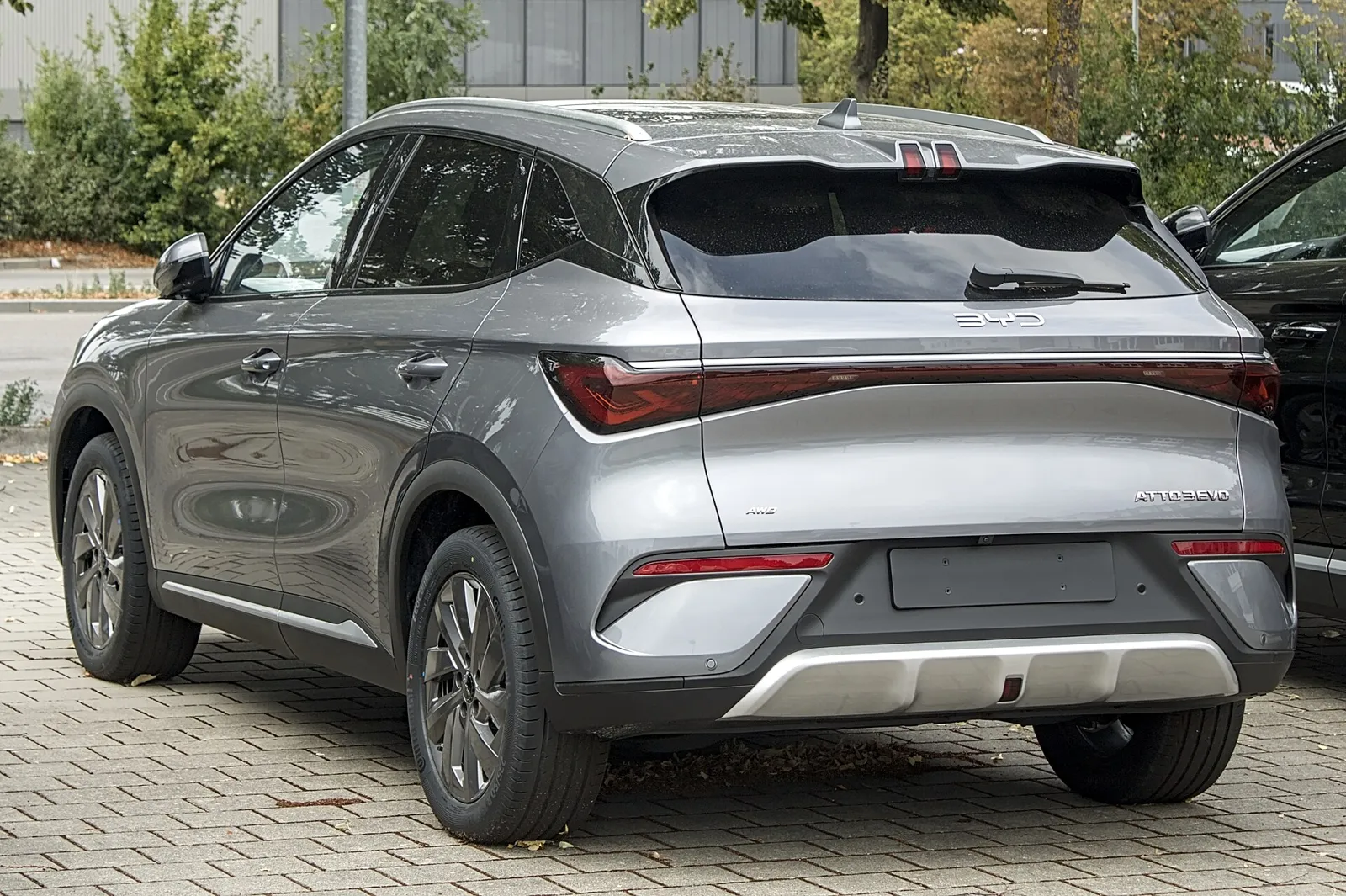
The Atto 3 is the car that introduced many Australians to BYD. With the Evo update, it is now really two cars. Both grades look alike, but BYD has given them different platforms, drive layouts and charging hardware.
Side by side
| BYD AU figures | Evo Dynamic | Evo Premium |
|---|---|---|
| Driven wheels | Front | Rear |
| Battery (Blade LFP) | 60.48 kWh | 74.88 kWh |
| Power | 150 kW | 230 kW |
| 0-100 km/h | 7.3 s | 5.5 s |
| Range (WLTP) | 420 km | 510 km |
| Boot | 434 L | 490 L + 101 L front boot |
| Kerb weight | 1,750 kg | 1,880 kg |
The 800-volt difference
The Premium sits on BYD's e-Platform 3.0 Evo, which moves from 400-volt to 800-volt electrics. BYD says that lets it charge at up to 220 kW on a compatible DC charger. For anyone who drives between cities, that matters more than the extra 80 kW of power. Moving the motor to the rear also made room for a front boot and a deeper main boot.
What both get
The gear selector moves to a steering-column stalk, which clears space in the console. Both grades get an 8.8-inch driver display, a 15.6-inch touchscreen, wireless Apple CarPlay and Android Auto, 360-degree cameras, adaptive cruise and rear cross-traffic alert with braking. Cover is 6 years/150,000 km on the vehicle and 8 years/160,000 km on the battery.
How to choose
The Dynamic suits buyers who mainly drive around town and charge at home. It is also more range than the original Atto 3 offered. The Premium is the better family car, with more space, quicker charging and a 90 km range buffer. Check current pricing on BYD's build-and-price tool. If the gap is about one tank of petrol a month over a typical finance term, we'd stretch to the Premium.